
Talking with images: A Photojournalist’s Life
Set in Sarajevo and developed in partnership with WARM Foundation, this intensive five-day masterclass explores the ethical and narrative challenges of contemporary photojournalism. With Fabio Bucciarelli, Manu Brabo, Diego Ibarra Sanchéz, and Bulent Kilic
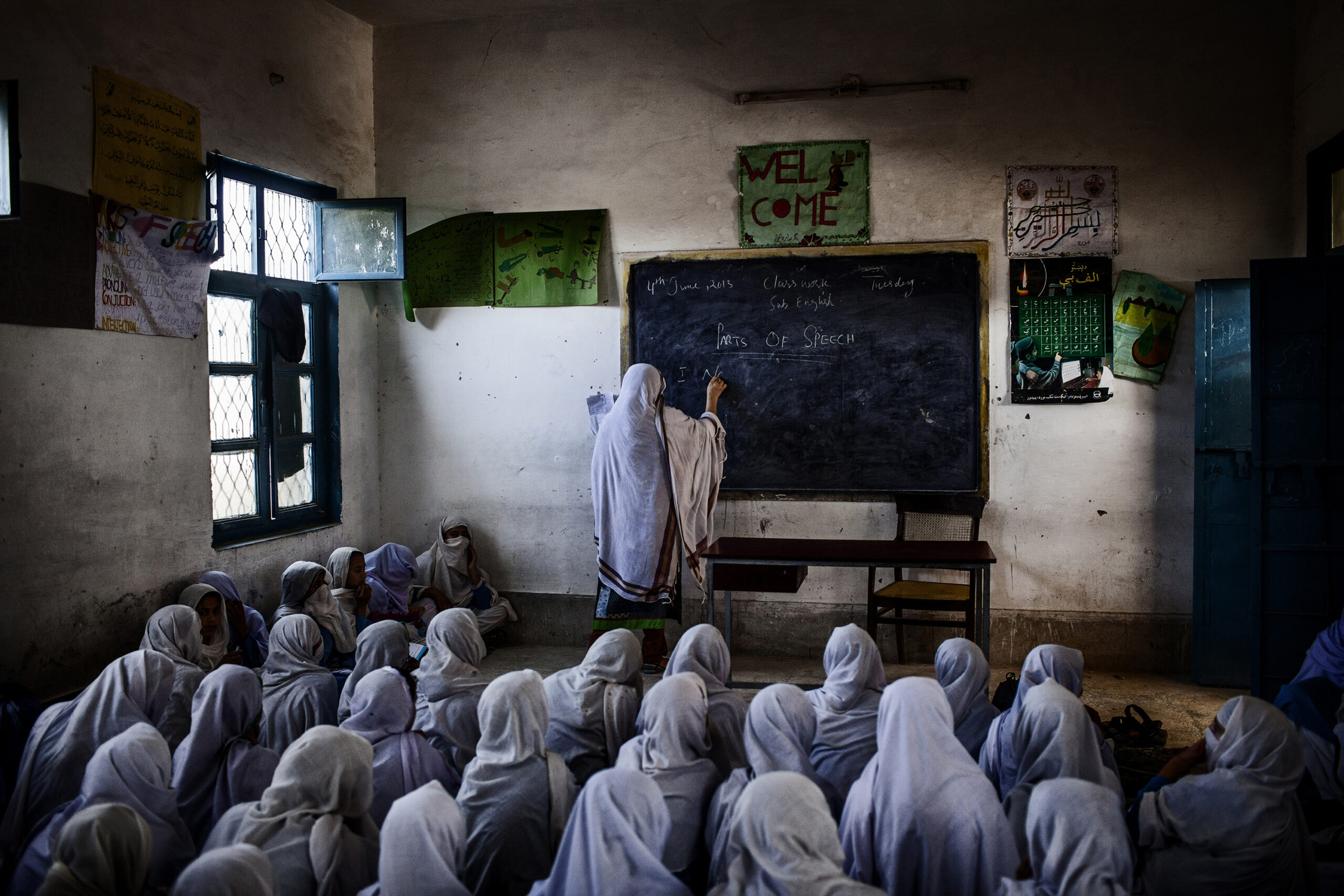
©Diego Ibarra Sánchez
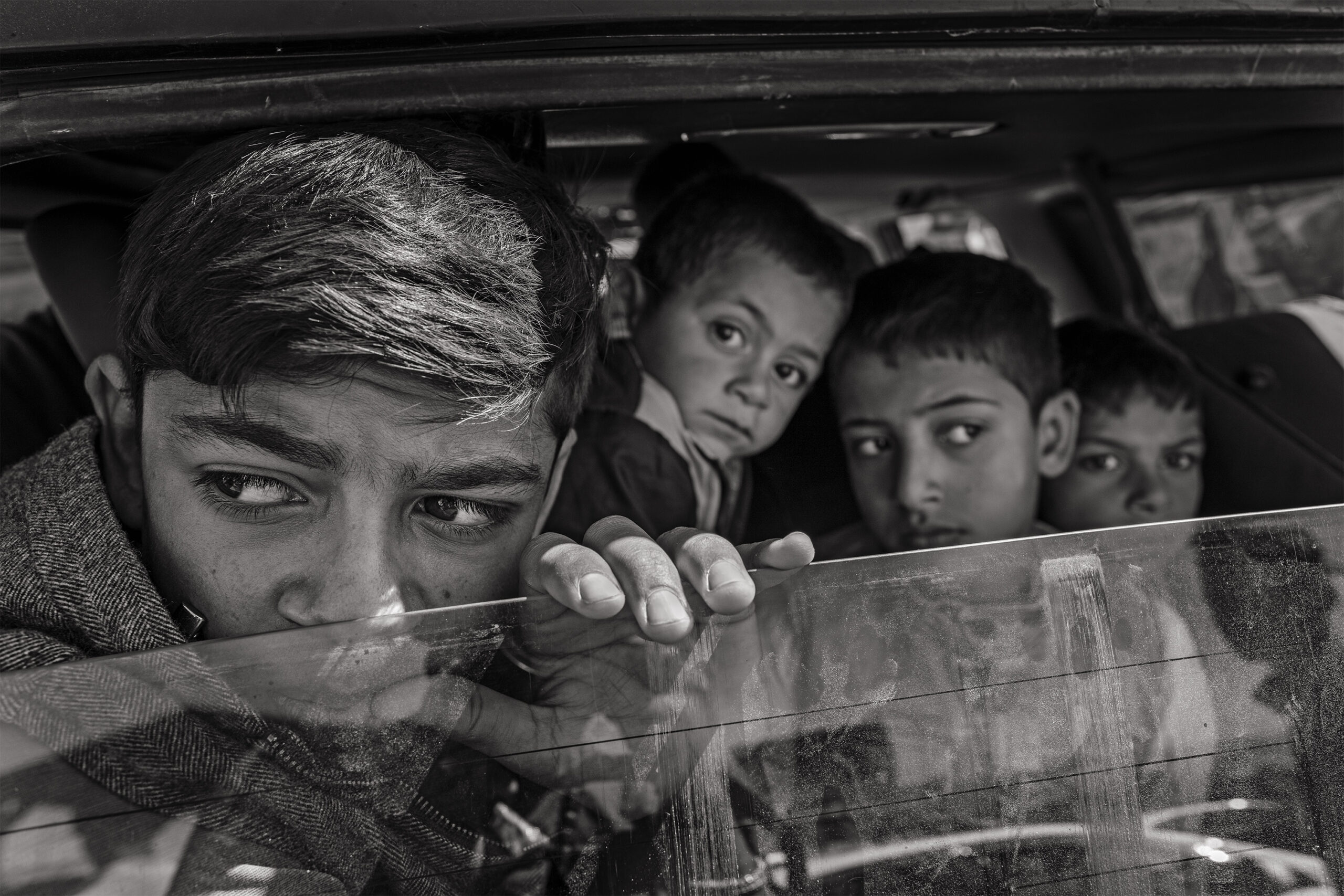
©Fabio Bucciarelli
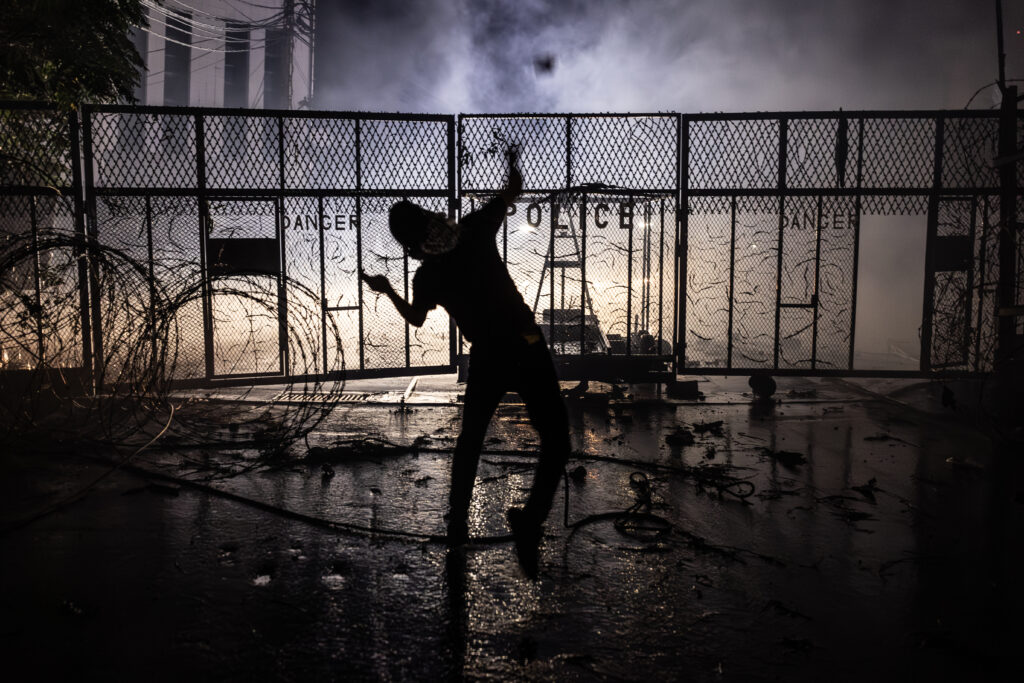
©Manu Brabo
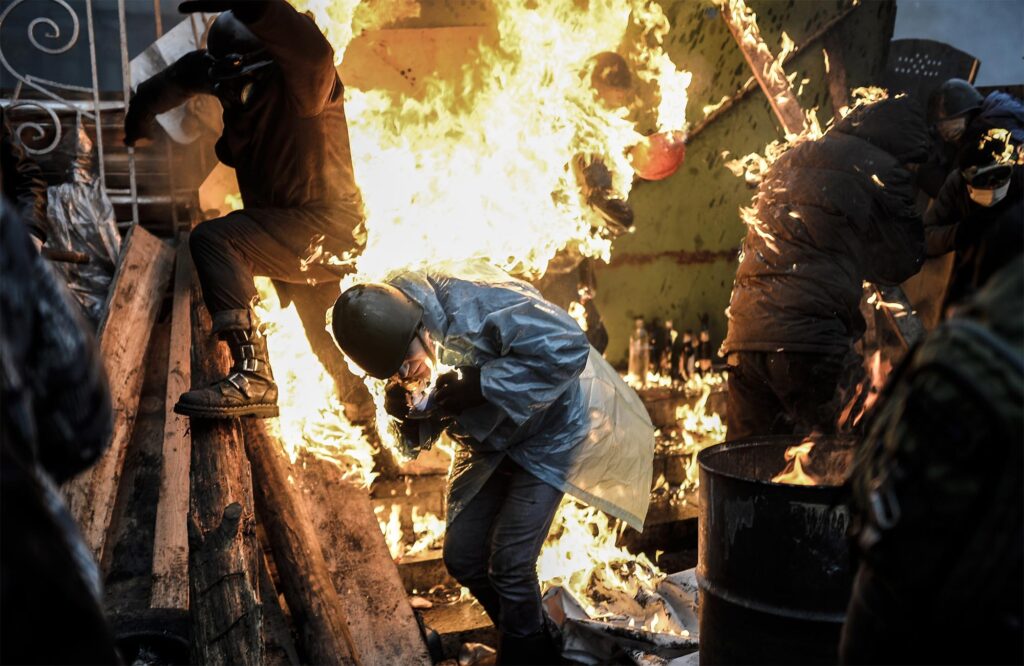
©Bulent Kilic
Talking with images: A Photojournalist’s Life
Set in Sarajevo and developed in partnership with WARM Foundation, this intensive five-day masterclass explores the ethical and narrative challenges of contemporary photojournalism. With Fabio Bucciarelli, Manu Brabo, Diego Ibarra Sanchéz, and Bulent Kilic
With a focus on conflict and humanitarian storytelling, this masterclass brings together mentorship, fieldwork, and critical reflection to help participants refine their visual language and strengthen their journalistic approach.
Program
Set in Sarajevo, this intensive five-day masterclass immerses participants in the ethical and narrative challenges of contemporary photojournalism, with a particular focus on conflict and humanitarian storytelling.
Guided by internationally acclaimed photographers Manu Brabo, Fabio Bucciarelli, Diego Ibarra Sánchez, and Bülent Kılıç, the masterclass guides participants through the full creative process—from the spark of a story idea to its execution in the field—while placing strong emphasis on editing, sequencing, and the development of a cohesive and impactful body of work.
Through a combination of lectures, group sessions, one-to-one mentorship, and field assignments, participants will explore every stage of visual storytelling.
Sarajevo offers a uniquely powerful backdrop for photojournalism and conflict photography. Marked by the scars of the siege, the city still carries visible traces of its past, shaping a complex and deeply human environment for storytelling. Participants will be supported both logistically and through a local network, ensuring access and cultural insight.Participants will develop their stories independently or in small groups, while mentors are available at designated times for guidance, portfolio reviews, and constructive feedback aimed at refining both narrative and visual impact.
Each day also includes intimate talks and lectio magistralis with the instructors, offering insight into their personal approaches, long-term projects, and experiences in conflict zones, while addressing the practical realities of freelance work, collaboration with writers, and navigating an evolving media landscape.
The program encourages reflection on audience engagement, community building, and the future of independent visual journalism in a rapidly changing, post-truth world.
Open to photographers of all levels—from passionate amateurs to seasoned professionals—this workshop offers a rare combination of immersive practice, expert mentorship, and creative inspiration. Participation is limited to 35 people to ensure a focused and high-quality learning environment.
Day 1WHERE STORIES BEGIN
09:00 – 09:30
Welcome Breakfast
10:00 – 10:30
Workshop Introduction
Presentation of the program, the philosophy of the workshop, and its key objectives. Led by the four instructors, this session sets the framework for the learning experience and outlines expectations.
10:30 – 13:00
Assignment Discussion & Group Division (Plenary)
13:00 – 14:30
Lunch Break
14:30 – 16:00
Guest Talk: Diego Ibarra Sánchez — Navigating photojournalism: finding your storytelling identity
16:00 – 18:30
Fieldwork and Portfolio Review
Day 2CRAFTING THE NARRATIVE
09:00 – 09:30
Breakfast
Breakfast session for participants, providing an opportunity to discuss first impressions and share insights from fieldwork.
09:30 – 13:00
Group Work Session
Participants meet with all four instructors to review challenges from the first day. A collaborative space for questions, feedback, and guidance on ongoing projects.
13:00 – 14:30
Lunch Break
14:30 – 16:00
Guest Talk: Bulent — Inside the Middle East: My Journey from Staff Photographer to Freelance
Bulent will discuss the importance of composition and emotion in photography and how to develop a distinctive photographic style. The session will also cover the history of press photography and the influence of philosophical thinking on visual storytelling, with practical examples and guidance on connecting technique and perspective.
16:15 – 18:30 | Fieldwork and Portfolio Review
Participants go out to shoot individually or in small groups according to their assigned projects. Mentors will remain available at the base for one-to-one meetings and portfolio reviews for those who wish to receive personalised feedback and guidance.
Day 3EXPANDING YOUR VISION
09:00 – 09:30 | Breakfast
Breakfast session for participants, providing an opportunity to review progress, discuss challenges encountered in fieldwork, and exchange feedback with peers and instructors.
09:30 – 13:00 | Group Work Session
Participants meet with instructors to analyse progress on their stories, discuss creative and technical challenges, and receive targeted guidance for developing their narratives further. The session encourages problem-solving and peer discussion to enhance project outcomes.
13:00 – 14:30
Lunch Break
14:30 – 16:00 | Guest Talk: Manu Brabo — The Photographer’s Role in Conflict Reporting
Through Manu’s work in various conflict zones over more than 15 years, we will explore the different challenges this profession presents, highlighting the inevitable coordination and cooperation between writer and photographer when working for major newspapers, where the text often sets the pace of the story.
16:15 – 18:30 | Fieldwork and Portfolio Review
Participants go out to shoot individually or in small groups according to their assigned projects. Mentors will remain available at the base for one-to-one meetings and portfolio reviews for those who wish to receive personalised feedback and guidance.
Day 4SHAPING THE STORY
09:00 – 09:30 | Breakfast
Breakfast session for participants, providing an opportunity to reflect on ongoing projects, discuss insights and challenges from fieldwork, and share feedback with peers and instructors.
09:30 – 13:00 | Group Rotation
Each group is paired with a new instructor, bringing fresh perspectives to ongoing projects. The session offers focused guidance to strengthen story development and narrative structure.
13:00- 14:30
Lunch Break
14:30 – 16:00 | Guest Talk: Fabio Bucciarelli — Authorship in Photography: Personal Vision and Responsibility
In this session, Fabio Bucciarelli will share his approach to photography, exploring a personal, authorial vision and reflecting on the challenges of working on stories in a rapidly changing world of post-truth, where photography faces unprecedented risks due to AI and fake news—but at the same time is more important than ever.
16:30 – 18:30 | Fieldwork and Portfolio Review
Participants go out to shoot individually or in small groups based on their assigned projects. Mentors remain available at the base for one-to-one meetings, portfolio reviews, and personalised guidance for those who wish to refine their work or receive feedback.
Day 5CHAOS & ORDER
09:00 – 09:30 | Breakfast
Informal meet-and-greet for participants and faculty over coffee, providing an opportunity to connect and discuss plans for the final edits.
09:30 – 13:00 | Final Group Editing Session
All participants meet with their instructor to finalize the last edits of the stories created during the workshop. Each instructor works individually with participants, focusing on the aesthetic and narrative value of each image and ensuring coherence in form and message.
13:00- 14:30
Lunch Break
14:30 – 18:00 | Final Editing & Slideshow Preparation (Plenary)
The four mentors will engage with all participants, providing diverse perspectives and personalized guidance to refine their edits and overall projects ahead of the final screening.
21:30 – 22:30 | Screening & Final Presentation
A screening of the students’ projects, showcasing the work produced throughout the workshop. Participants and instructors will discuss the results, providing final reflections and feedback.
21:30 – LATE
Day 6 - Extra Dayvisit WARM exhibition
10:00 | Guided Tour Through the WARM Exhibition
Guided visit to a major WARM photo exhibition in a historical building in Sarajevo. The broader concept of the process is explained by curators and designers, with a focus on both the work itself and the process behind it, from how ideas emerge within the network to how they are developed, edited, produced, and presented. Exhibitions are approached as ongoing projects, often continuing beyond the exhibition itself through further presentations, publications, and other formats. Participants are welcome to stay in Sarajevo for the WARM Festival and follow the rest of the program.
In partnership with WARM
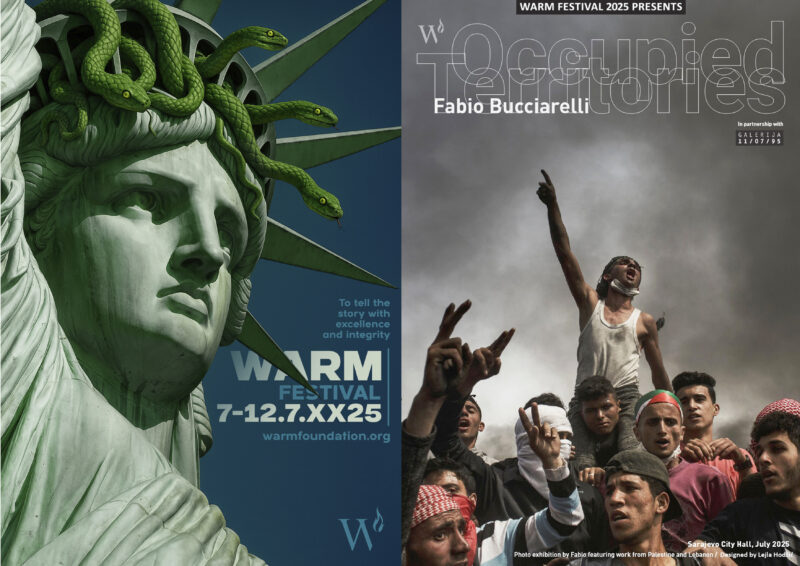
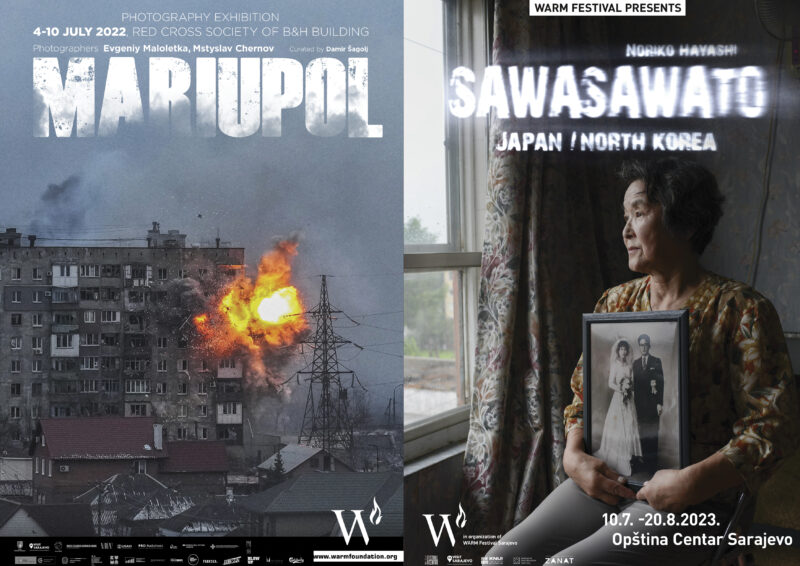
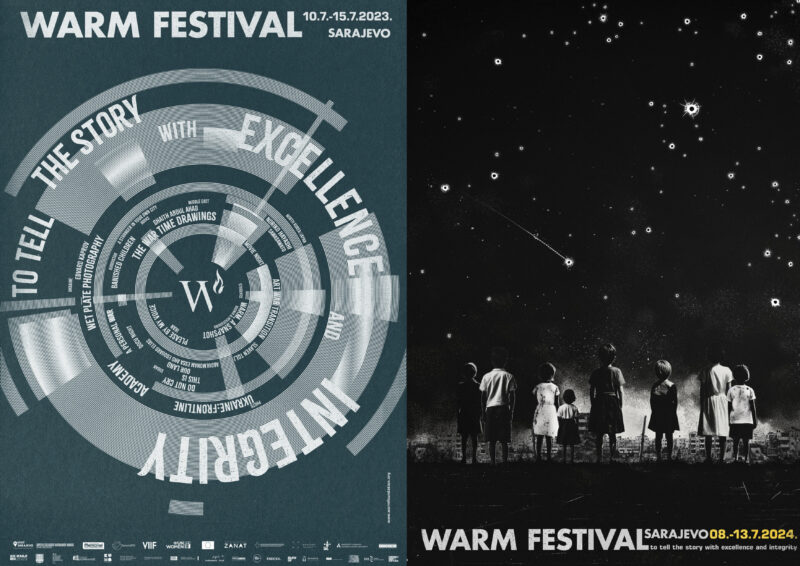
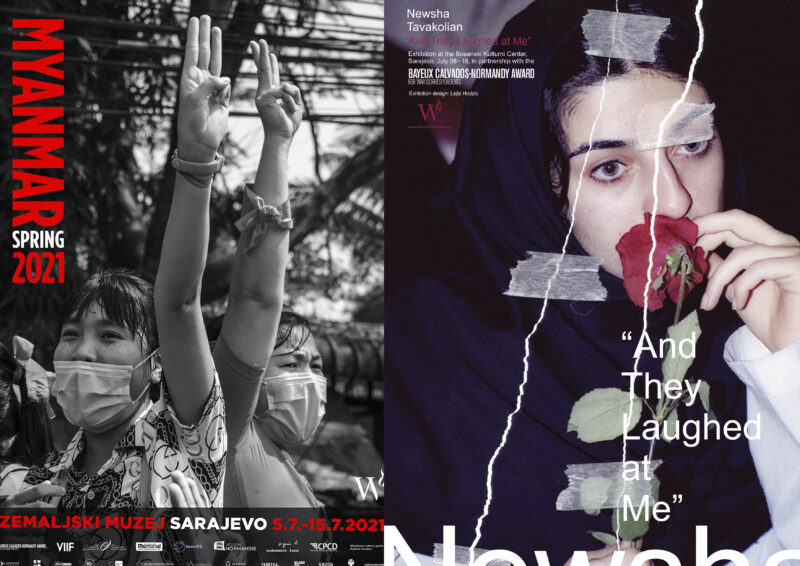
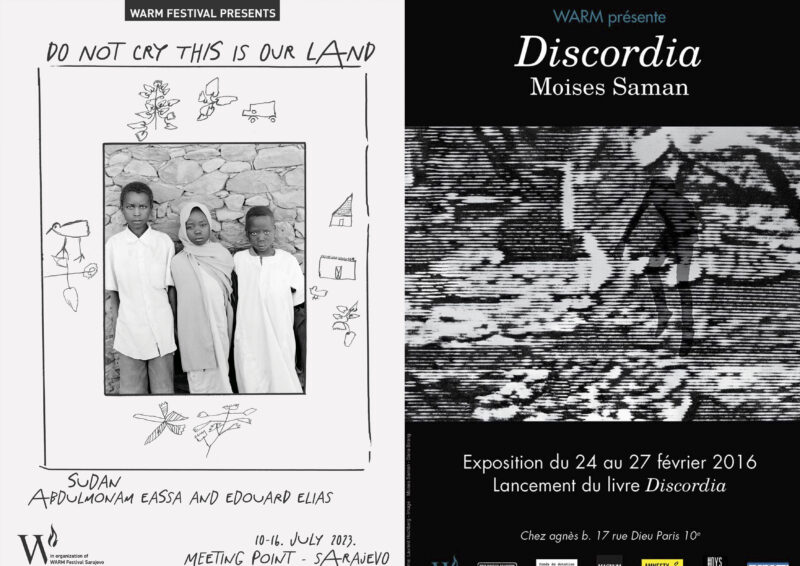
The Sarajevo masterclass is developed in collaboration with WARM Foundation (war, art, reporting and memory), a Sarajevo-based initiative that brings together authors, experts, and practitioners working across different aspects of contemporary conflicts, through the festival and other projects that move between research, production and presentation.
Over the years, WARM has developed a series of similar collaborations with leading institutions and collectives, creating formats where education, production and public presentation are closely connected.
WARM’s work is inherently multidisciplinary, bringing together different but connected fields. This adds context and depth, placing photographic work alongside reporting, research, writing, and other forms of practice, and showing how it functions across different stages, from development to final form.
Scheduled one week before the WARM Festival (July 6–12), the masterclass is conceived as part of a longer stay in Sarajevo. Participants are encouraged to stay for the festival and take part in selected programs, including additional masterclasses on photography and related topics.
A Different Model
You may have noticed that this workshop is significantly more affordable than most of those offered by major agencies, festivals, or schools. This is not due to lower quality — quite the opposite.
There are specific reasons behind this choice. By removing intermediaries and management costs, and by working through international collaborations with friends and colleagues, we are able to combine forces, keep expenses down, and maintain full creative control. Most importantly, we do not want high participation fees to exclude passionate and talented photographers. Our goal is not profit, but to build a community around a slower, more reflective form of journalism: work done in the field, meeting people in their own environments, in order to tell stories that are not only documented, but lived.
This approach is disappearing. We want to help keep it alive by supporting the next generation of photographers — those willing to slow down, look closer, and give this kind of storytelling a future. This is the true meaning of the workshop.
*An ARCI membership card, valid for one year, is required to participate in the masterclass. The €15 fee is not included in the price, and membership can be completed online via the link provided or directly on-site.
Mentors
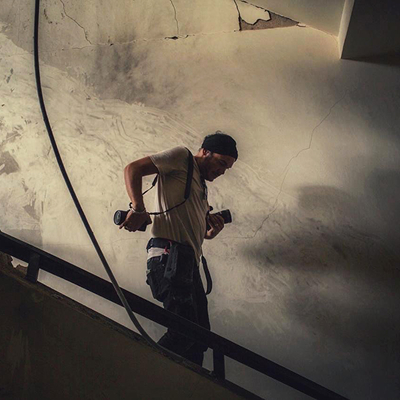
Fabio Bucciarelliis an Italian photographer, journalist, and author known internationally for his documentation of conflicts and humanitarian crises. Bucciarelli’s evocative images not only capture the human experience but also engage viewers on a visceral level, encouraging deep reflection on the complexities of the modern world. Recognized as one of the most influential photojournalists of our time, Bucciarelli collaborates with leading editorial platforms, including La Repubblica, Die Zeit, and The New York Times, and his work has earned several international awards, including the Robert Capa Gold Medal, multiple World Press Photo, multiple Sony World Photography Awards, the Visa d’Or News, the Lucie Award, and The Bayeux-Calvados for War Correspondents. He has also won thirteen POY awards, including the title of Photographer of the Year in 2019.
Over the past decade, Fabio Bucciarelli has complemented his work as a photojournalist with extensive writing and teaching activities. Since 2009, he has contributed dispatches from conflict zones for Il Fatto Quotidiano and co-authored a book on the Libyan war with Stefano Citati. He has also published three long-term photographic books, further developing his narrative approach through exhibitions and author-driven projects.
Alongside his editorial work, Fabio has developed an ongoing educational practice, leading international courses, workshops, and masterclasses in photojournalism across Europe and beyond. Over the years, he has been invited to share his experience at institutions and events such as the International Journalism Festival, Bocconi University, Repubblica delle Idee, Visa pour l’Image, the Turin International Book Fair, the Bronx Documentary Center, and the Frontline Club, among others. He has also taken part in TEDx talks and appeared on Italian television programs, including Che Tempo Che Fa and Piazza Pulita. In 2022, he worked as a correspondent for RAI TG3 covering the war in Ukraine.
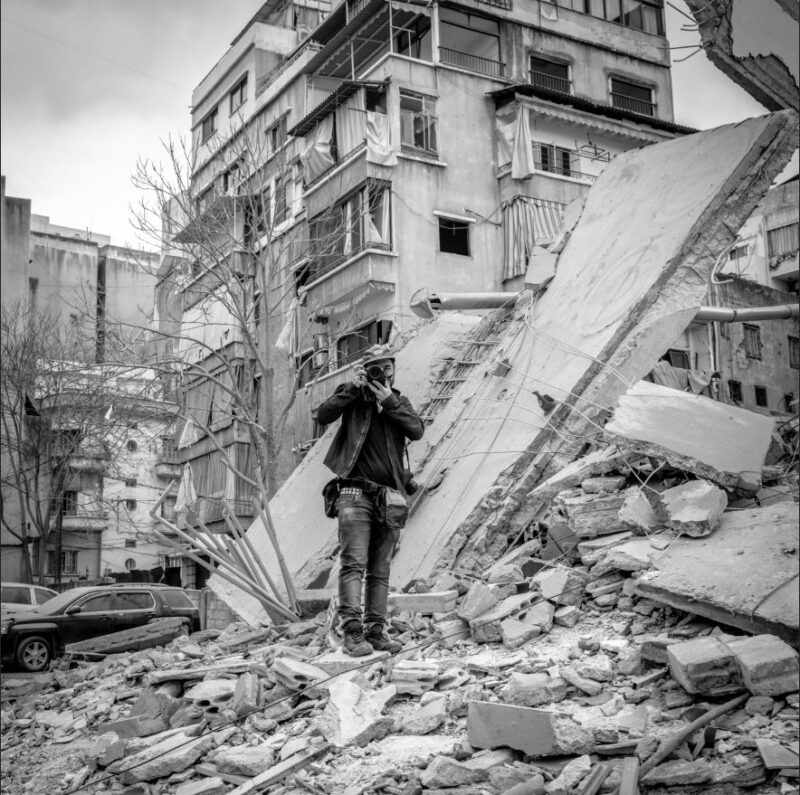
Diego Ibarra Sánchez (Spain, 1982) is a visual journalist and educator based in Lebanon and a regular contributor to The New York Times since 2012, specializing in long-term projects. Author of the photobook The Phoenician Collapse (2022), with a foreword by Amin Maalouf, he describes his work as “painting with light” in times of violence, blending documentary and poetic approaches.
He began working with The New York Times in Pakistan, where he lived for five years, and has collaborated with international media and organizations. His work focuses on conflicts and humanitarian crises across countries such as Syria, Iraq, Ukraine, Pakistan, and Lebanon, covering major events including the Yazidi genocide and the fall of Mosul’s Caliphate.
The Phoenician Collapse, developed over seven years in Lebanon, received international recognition, including Best Independent Book by the Lucie Foundation. He has also contributed to several collective photobook projects.
His awards include a Pulitzer Prize acknowledgment (2023) with The New York Times for coverage in Ukraine, the 2026 World Press Photo award for his long-term project on how war affects education, POY Asia (2024), NPPA (2025), and a Getty Images Grant. His work has been exhibited worldwide.
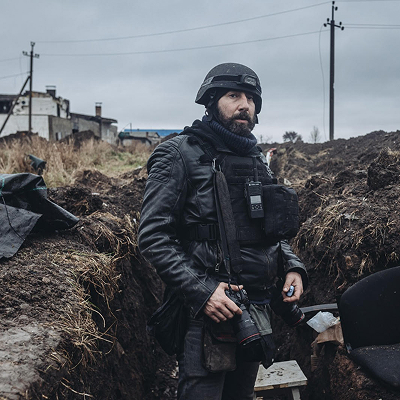
Manu Brabo began his career as an independent photojournalist in 2007 in Kosovo. Since then, Manu has used photography to investigate violence among humankind, working for media outlets such as The Wall Street Journal and The Associated Press, NGOs such as Reporters Without Borders, and foundations like The Wellcome Trust.
He has been awarded the Pulitzer Prize, five Picture of the Year International (POYI) awards, and the British Press Awards. His work has been exhibited at festivals, photography centers, and art galleries across Europe and the United States. In 2017, in collaboration with National Geographic, he created a retrospective of his work in the Middle East titled Un Día Cualquiera, exhibited in Madrid and Barcelona.
He has taken part in various projects supporting the Spanish Breast Cancer Federation and promotional campaigns for the Prado Museum and Samsung. Additionally, he has carried out cultural projects such as the musical show Ukráina with the rock band Toundra and with the Gijón International Film Festival (FICX).
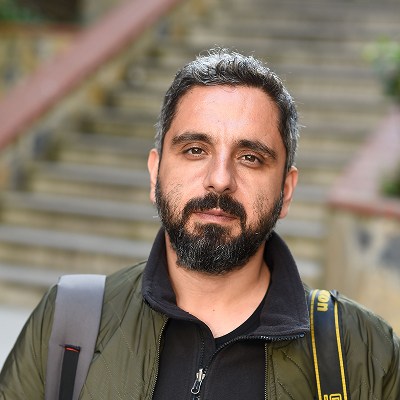
Bülent Kılıç is a photojournalist working as a freelancer across Europe and the Middle East. He began his career in photography in the early 2000s and describes himself as part of the last generation of analog photographers. Kılıç is a Kurdish photographer from Dersim, a mountainous region in eastern Turkey. He began covering the war in Syria from its early stages. In 2012, when he arrived at the Turkish-Syrian border, he realized that this would be the defining frontier of his life—nothing would be the same after crossing it. Since then, Kılıç has covered major conflicts in Iraq, Ukraine, and Afghanistan. He worked for Agence France-Presse (AFP) for 16 years before transitioning to freelance work in 2024. For Kılıç, simplicity enriched with aesthetic sensibility and emotional interaction is more meaningful than many other elements in photography. In his images—where he often strives to express what he feels—he seeks to convey a sense of hope and resistance.
Kilic has won multiple World Press Photo Awards and has also served as a jury member for the competition. He has been honored with the Visa d’Or—France’s most prestigious photography award—as well as receiving multiple accolades from Pictures of the Year (POY) in the United States. In Türkiye, he was awarded the Press Freedom Award for his work as a photojournalist. He collaborates with the Dutch newspaper de Volkskrant and with leading French publications such as Paris Match and Le Monde.
FAQ
Who is this masterclass for?
The masterclass is open to everyone, with no age or experience requirements. It is designed for anyone interested in developing a personal photography project, deepening their visual language, or exploring a more structured approach to working.
What language will the masterclass be taught in?
The workshop will be conducted in English.
If you do not speak English, you can request to work individually with one of the tutors in Italian (Fabio Bucciarelli), Spanish (Diego Ibarra Sánchez or Manu Brabo), or Turkish (Bülent Kılıç).
Do I need to prepare anything in advance?
Preparation is not mandatory, but it is recommended. Bring an idea you’d like to develop during the masterclass, a portfolio, or a selection of existing images. This material will help facilitate discussion and enhance the editing sessions. If you don’t have anything ready, don’t worry, we will guide you—there will still be space for experimentation and creative exploration.
Will there be an opportunity to receive individual feedback
Yes. While most of the sessions will take place in a group setting to encourage collective learning and exchange, individual reviews and one-on-one feedback sessions are also part of the program. Each participant will receive dedicated attention from the mentors throughout the masterclass.
How do I get there?
Once you have registered, you will receive all the logistical information in detail, including directions, transportation, meeting points, as well as recommendations on where to eat and stay.
Where can I stay?
There are several accommodation options in Sarajevo. We are preparing a list of recommended places to stay—covering a range of price points—which will be shared soon with all registered participants.
Do I need to bring my own equipment? What should I bring?
Yes. Please bring your camera (with a wide-angle lens, preferably a 35mm) and a laptop with your preferred editing software (like Lightroom or Photoshop). These are essential for the shooting and post-production sessions.
What if I am no longer able to attend?
If you’re unable to attend, please note that the registration fee is non-refundable. However, to ensure you still benefit from the experience, we will offer you a one-hour individual call with each of the four mentors. This way, you can recover some of the content and receive tailored feedback on your work.
Can I record the masterclass?
No, recording is not allowed. This policy is in place to create a respectful and safe environment where participants feel free to share their work and ideas without concern about being recorded or having their contributions shared outside the context of the masterclass.